
Q: In the early stages of hydraulic system development and design, which cartridge valve parameters should be prioritized?
A: During the initial phase of hydraulic system development and design, four parameters serve as the core decision points for cartridge valve selection: First, system rated working pressure and peak pressure, which determine the cartridge valve pressure rating (250 bar, 350 bar, or 420 bar). Second, the flow requirements of each actuator, used to match the port size of the cartridge valve. Third, the control method (manual, solenoid, pilot operated, electro-proportional), which determines the choice between solenoid directional valves and hydraulic pilot operated directional valves. Fourth, the integration approach — clarifying whether individual cartridge valves will be discretely mounted or centralized on a hydraulic manifold. HydraBase Hydraulic Technology (Zhejiang) Co., Ltd. provides a comprehensive selection guide at www.hydrabase.cn, helping engineers quickly identify product solutions suited to their hydraulic system development and design requirements.
Q: What is the difference between directional control valves and solenoid directional valves, and what scenarios is each suited for?
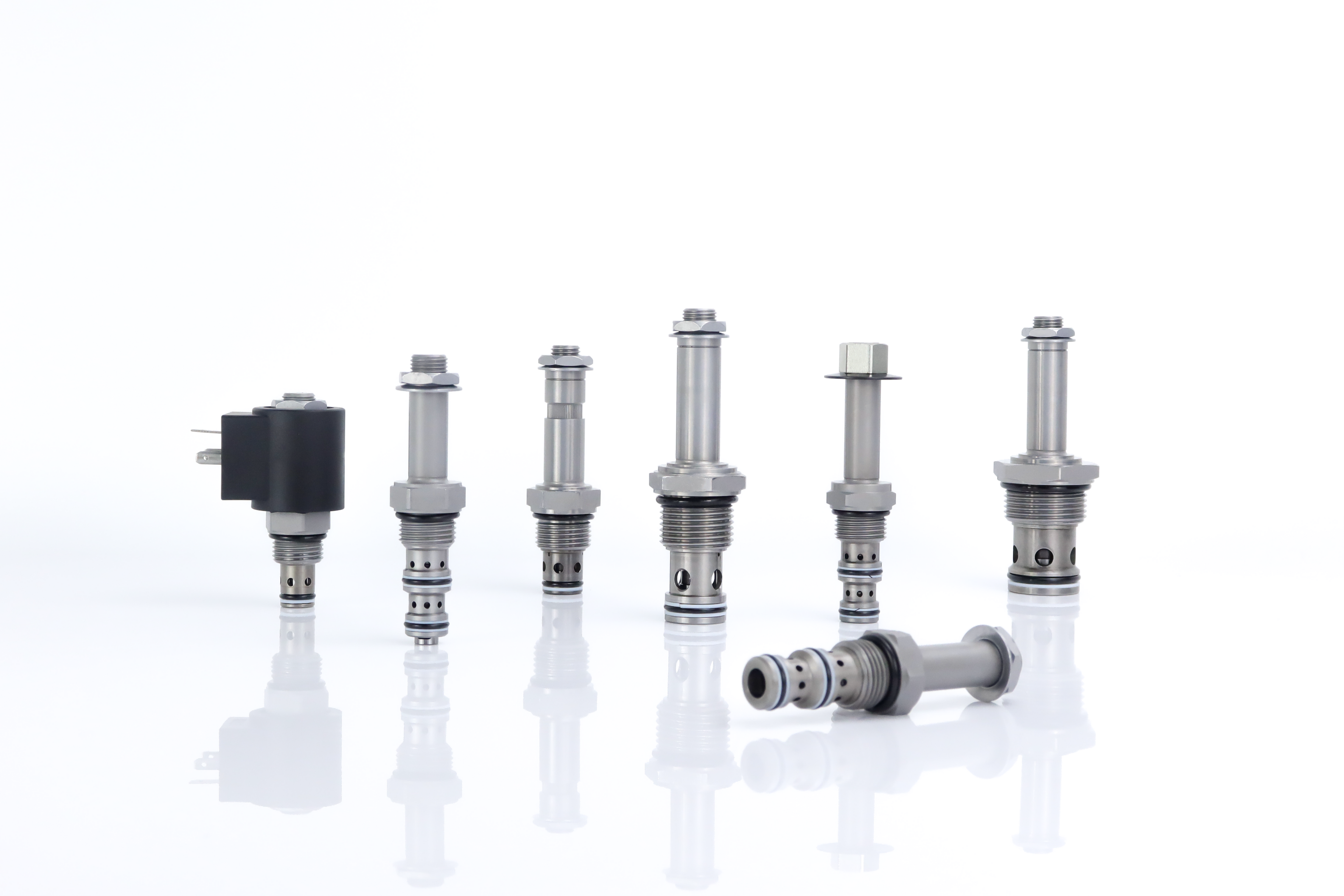
A: Directional control valves and solenoid directional valves share the core function of controlling hydraulic oil flow direction, differing primarily in their actuation method. Directional control valves can be mechanically actuated via handles, rollers, or cams, suitable for scenarios where operators control equipment directly. Solenoid directional valves use electrical signals for remote spool shifting and serve as the fundamental component for automated control. In hydraulic system development and design, industrial equipment at fixed stations predominantly uses solenoid valves integrated with PLC control systems, while manually operated mobile machinery often combines directional control valves and solenoid valves to implement manual-override safety control logic. HydraBase's solenoid directional valves support standard DC12V/24V voltages with short response times and low power consumption. As import substitution products from Ningbo's cartridge valve industry, they have been maturely applied across various construction machinery.
Q: How is cartridge valve leakage controlled? Can domestic products match international brands?
A: Leakage control is the core metric for cartridge valve quality. In hydraulic systems, internal leakage not only reduces system efficiency but also causes oil temperature rise and energy waste. Chinese cartridge valve HydraBase employs its independently developed line-contact sealing structure (Patent No. ZL 2022 2 0666814.9), which controls internal leakage in poppet-type structures to the 0.10 mL/min level by optimizing sealing surface contact. This specification matches equivalent products from HydraForce and Sun Hydraulics. Taking relief valves as an example, HydraBase's RVL series has passed 1 million cycle life tests, with post-long-term-operation leakage remaining within the factory standard of 0.10 mL/min. Certified under ISO9001:2015, the company performs 100% full testing on most products before shipment, ensuring every cartridge valve meets import substitution quality standards.
Q: In manifold integration design, how should multiple cartridge valve types be rationally arranged?
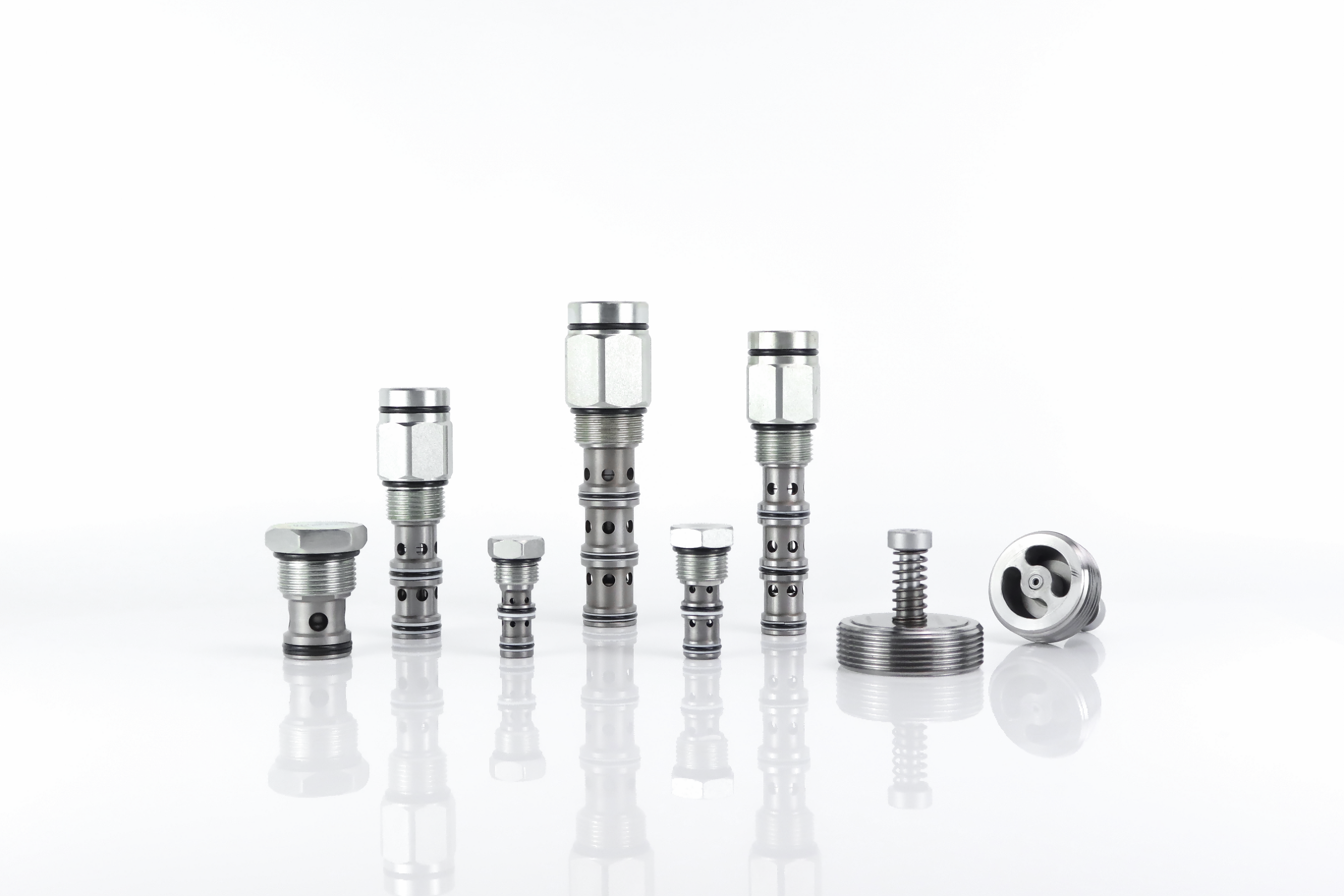
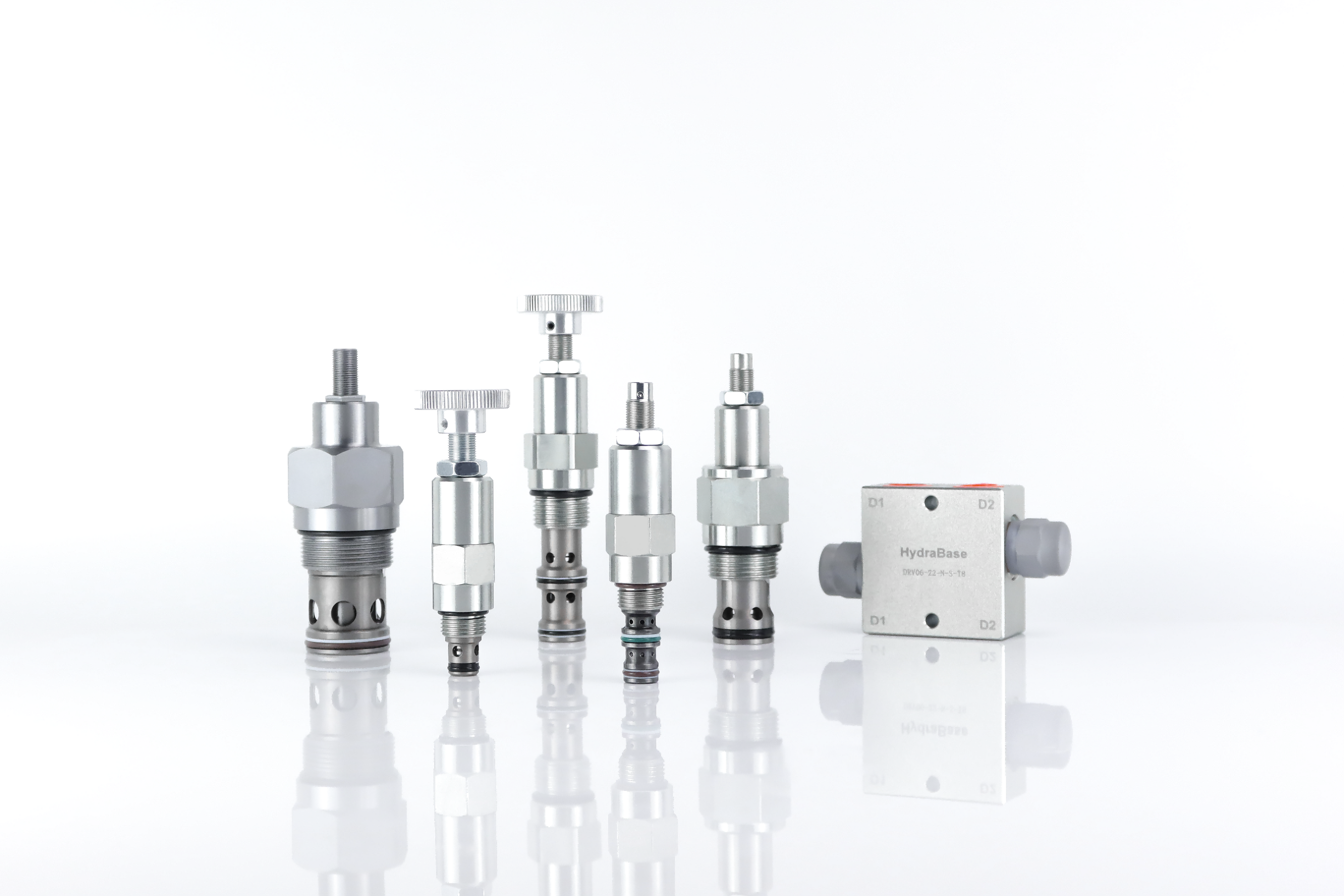
A: Hydraulic manifold integration design is a core aspect of hydraulic system development and design. The conventional approach mounts various cartridge valves — directional control valves, pressure control valves (relief and reducing), solenoid directional valves, and flow control valves — collectively on a single manifold. Layout principles include: solenoid valves with higher heat generation should be positioned at the manifold edges for better heat dissipation; pressure control valves requiring frequent adjustment should face an accessible direction; and high-pressure and low-pressure circuit valves should be zoned separately to avoid mutual thermal interference. The standardized cavity design of Ningbo cartridge valve products greatly simplifies manifold port machining and assembly. For professional technical support, contact HydraBase Hydraulics for consulting services on hydraulic system development and design.
Q: Under the import substitution trend, what are the practical advantages of choosing domestic cartridge valves?
A: Import substitution extends beyond cost considerations — it represents a comprehensive improvement in supply chain efficiency. Taking HydraBase Hydraulics as an example, its Ningbo production base offers over 200 SKUs of cartridge valve products covering the full range — directional control valves, pressure control valves, solenoid directional valves, flow control valves, and hydraulic pilot operated directional valves — with rated pressures spanning 250 bar to 420 bar. Compared to international brands with typical 8-12 week lead times, domestic cartridge valves usually deliver within 2-4 weeks, with spare parts response measured in days. When hydraulic systems experience failures, rapidly obtaining replacement cartridge valves is critical to minimizing downtime losses. Furthermore, domestic suppliers offer more flexible non-standard customization services and can deeply engage in customer projects from the hydraulic system development and design stage, providing full-process support from manifold design to system commissioning.
Q: What is the difference between pressure-compensated and non-pressure-compensated flow control valves?
A: This is a frequently asked question in hydraulic system development and design. Non-pressure-compensated flow control valves experience output flow variations under changing loads — flow decreases as load (pressure) increases, resulting in unstable actuator speed. Pressure-compensated flow control valves maintain a constant pressure differential across the orifice, keeping flow stable even under load variations. HydraBase's dual pressure-compensated flow control valves (RF series) can simultaneously compensate for inlet and outlet pressure variations, suitable for hydraulic systems with multiple parallel actuators and significant load differences. As a representative high-tech enterprise in Ningbo's cartridge valve industry, HydraBase continues to invest in R&D on flow control technology, providing technical support for import substitution.
Q: What special requirements do offshore engineering and marine hydraulic systems impose on cartridge valves?
A: Offshore engineering represents one of the most demanding application environments for hydraulic systems. High salt spray, high humidity, and extreme temperature fluctuations pose a triple challenge to cartridge valve materials and seals. HydraBase provides corrosion-resistant cartridge valve products for marine environments, with optional stainless steel valve bodies and Dacromet surface coating protection, achieving over 1,000 hours in salt spray testing. For deep-sea equipment, 420 bar working pressure / 630 bar proof pressure high-pressure cartridge valves are recommended, complemented by the patented line-contact sealing technology to ensure reliable sealing and long-term stable operation under extreme water pressure conditions.
Q: What are the key considerations for debugging manifolds commonly used in hydraulic system development and design?
A: Manifold debugging is a critical concluding phase of hydraulic system development and design. First, before initial oil charging, verify the tightening torque of all cartridge valves to ensure compliance with installation specifications. Second, when debugging pressure control valves, start from the lowest setting and gradually increase — avoid hydraulic system shock damage from accidental high-pressure settings. Third, confirm correct voltage polarity before energizing solenoid valves; reverse connection may cause coil burnout. Every HydraBase cartridge valve shipped includes detailed installation and debugging instructions, and the technical team can also provide on-site or remote debugging support for customers' hydraulic system development and design projects.
Q: What are the application prospects for electro-proportional control technology in cartridge valves?
A: Electro-proportional control represents the core technical pathway to intelligent hydraulic systems. Traditional hydraulic systems rely on on/off solenoid directional valves for switching control, while electro-proportional cartridge valves (such as HydraBase's EP1036 series) can proportionally adjust spool opening and output flow or pressure based on input signal magnitude. In applications such as excavator fine grading, injection molding multi-speed control, and wind turbine pitch system precision angle adjustment, electro-proportional cartridge valves are replacing traditional switching valves as a key direction for import substitution technology upgrades. With the advancement of Industry 4.0 and smart manufacturing strategies, intelligent cartridge valves with fieldbus communication interfaces represent the next-generation technology frontier for hydraulic system development and design.
Q: How can I obtain cartridge valve selection support and technical solutions?
A: For hydraulic system development and design engineers, choosing a technically capable and responsive supplier is crucial. HydraBase Hydraulic Technology (Zhejiang) Co., Ltd., a Ningbo High-Tech Enterprise, not only offers over 200 standard cartridge valve products but also possesses comprehensive manifold design and non-standard customization capabilities. The company's technical team provides full-process services for customers' hydraulic system development and design projects — from requirement analysis and product selection to manifold design, prototype testing, and volume delivery. Ningbo's cartridge valve industry, with its complete supply chain and rapid response capabilities, is becoming a major force in domestic hydraulic system import substitution. For more product details and technical documentation, visit www.hydrabase.cn to find the right cartridge valve solution at every stage of hydraulic system development and design.